
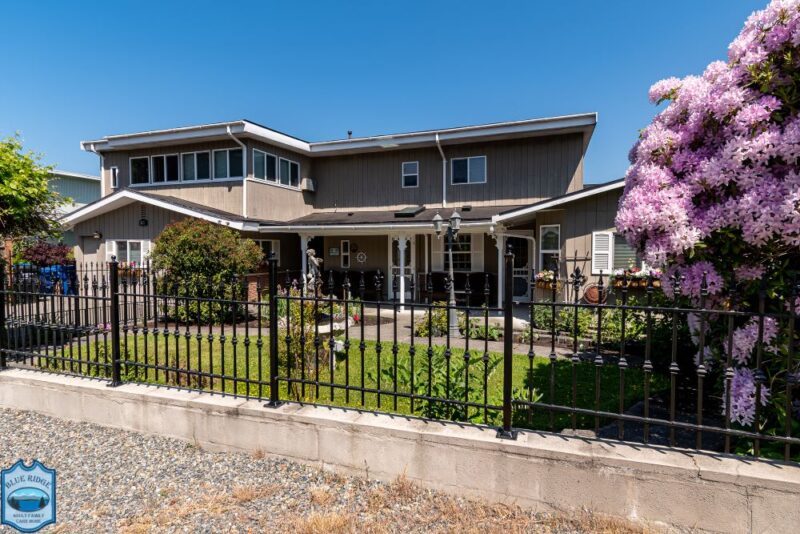
Adult Family Home vs Assisted Living in Seattle
What’s the Right Choice for Your Loved One?
Start Here
If you’re comparing an adult family home in Seattle to assisted living, understanding the differences can help you make the right decision for your loved one. While both provide support with daily living, the size, care model, staffing, and overall environment can vary significantly.

What Is an Adult Family Home?
An adult family home in Seattle is a licensed residential care home that typically serves a small number of residents in a house-like setting. In Washington State, these homes are regulated and provide 24-hour supervision and assistance with activities of daily living (ADLs).
Because adult family homes serve fewer residents, caregivers are able to provide more personalized, hands-on support throughout the day. Services often include:
The smaller environment allows caregivers to become very familiar with each resident’s needs, routines, and preferences.
What Is Assisted Living?
Assisted living communities are typically larger facilities designed for residents who need some support but still maintain a level of independence. Residents often live in private or semi-private apartments and receive scheduled assistance with daily activities.
Because assisted living communities serve many more residents, care is often structured around scheduled support rather than continuous hands-on attention. Staffing is shared across a larger population, which can limit how much individualized time each resident receives.
Assisted living can be a good option for individuals who are more independent and require only moderate support.
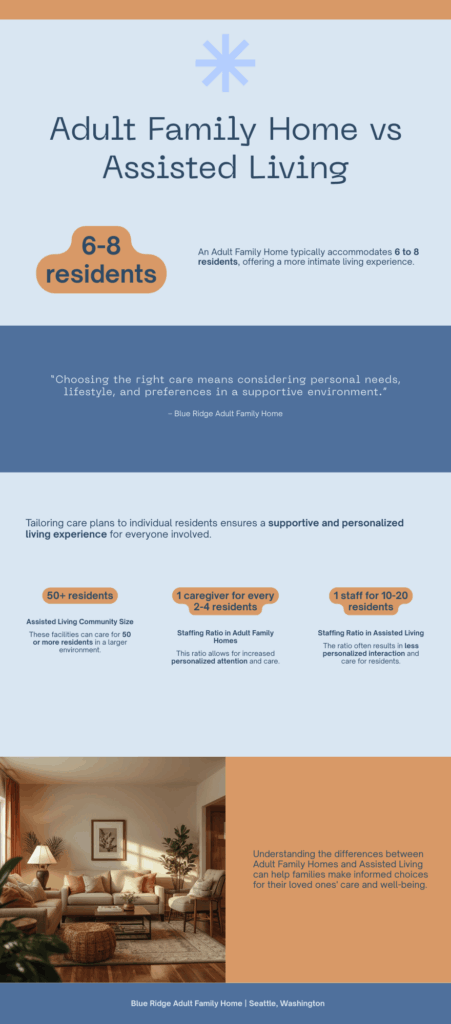
Here’s a quick side-by-side comparison to make the differences clear.
The Biggest Difference: Level of Care and Staffing Ratios
One of the most important differences between an adult family home and assisted living is the caregiver-to-resident ratio.
In a smaller adult family home Seattle setting, caregivers are typically responsible for far fewer residents at one time. This allows for:
- More one-on-one interaction
- Faster response times
- Closer monitoring of health changes
- More hands-on assistance throughout the day
For residents who require full assistance with activities of daily living, frequent repositioning, or higher medical oversight, a lower caregiver-to-resident ratio can make a meaningful difference.
In larger assisted living facilities, staff may be responsible for many residents simultaneously. While care is still provided, it may be more task-based and less individualized due to the size of the community.
Families often find that the smaller structure of an adult family home provides greater peace of mind when a loved one needs consistent, attentive care.
One-on-One Attention and Continuity of Care
Another key advantage of a smaller adult family home in Seattle is continuity. With fewer residents and a stable care team, caregivers are able to notice subtle changes in condition more quickly.
This is especially important for residents who:
In a more intimate care setting, routines are easier to maintain and transitions can feel less overwhelming.
Which Option Is Right for Your Family?
The right choice depends on your loved one’s care needs and preferences.
Assisted living may be appropriate if the resident:
An adult family home may be a better fit if the resident:
When care needs increase, families often begin to prioritize staffing levels and personalized attention over amenities.
Exploring Adult Family Homes in Seattle
If you are considering an adult family home in Seattle and would like to learn more about care options, it can be helpful to tour different settings and ask detailed questions about staffing ratios and level of support.
Understanding how much one-on-one attention your loved one will receive can provide clarity and confidence in your decision.
If you have questions about care levels, staffing, or availability, we’re happy to provide information and help you determine the right next step.